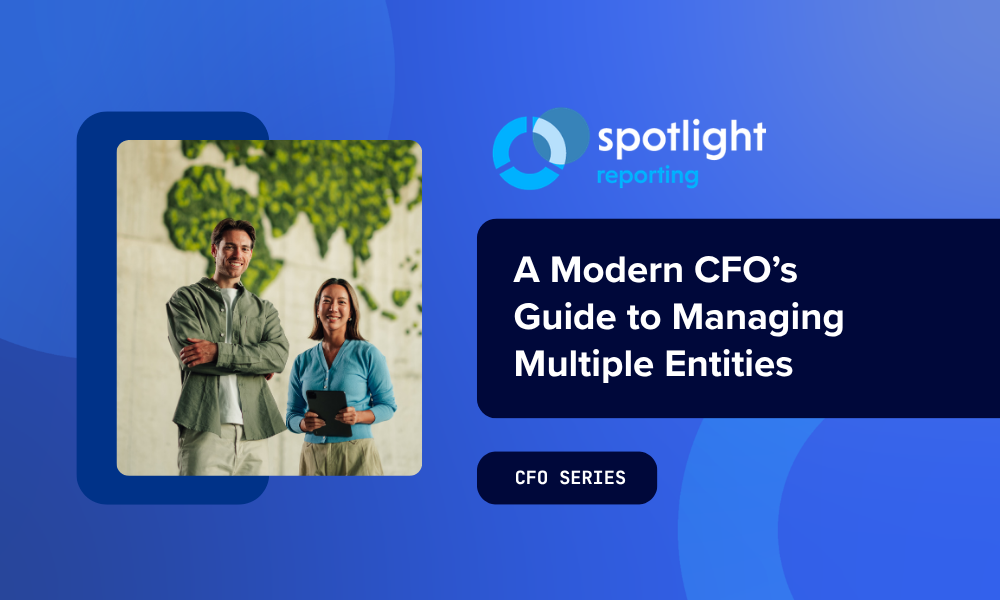
A CFO’s Guide to Managing Multiple Entities and the Bigger Picture

Managing one business is complicated enough. Add additional entities, accounting systems, countries, economic conditions, currencies, and all of sudden keeping track of the bigger picture becomes much harder.

Suddenly, the numbers you need are coming from different places, using different processes and sometimes being prepared by different people. One entity may close on time while another is still waiting on information. Intercompany balances need to be reconciled and fractional ownership considered. Foreign exchange movements need to be understood. Group-level reporting needs to make sense alongside the individual performance of each entity.

And the CFO still needs to give the CEO and Board a clear answer when they ask a deceptively simple question: "How is the business performing?"

This is where multi-entity or group finance becomes less about producing more reports and more about ensuring confidence in the numbers. You need enough consistency to compare performance across the organisation, while still understanding that each entity may have its own customers, costs, market conditions and operational realities.

For a first-time multi-entity, group CFO, that can be a significant shift. You are no longer just responsible for the financial performance of one part of the organisation. You are responsible for helping leadership understand how all the parts of the group fit together.

Leadership Perspective

When you inherit a group with multiple entities, the first challenge is usually not deciding what the perfect reporting structure should look like. It is working out what you can actually trust now, where the gaps are or could be and how much manual work and toil is sitting behind the numbers.

A number of things tend to make the biggest difference:

  • Understand how the numbers are being assembled today. Before changing the process, find out where each entity gets its data, who prepares it, which systems are involved and where the manual work happens. You will often find that the reporting process depends on a handful of people who know how to make everything work.
  • Create one consistent view of performance. Your entities may operate differently, but leadership still needs a common way to understand revenue, profitability, costs, cash and other key measures. Consistency of treatment and allocation makes it much easier to see what is actually happening across the group.
  • Look beyond the headlines. A consolidated result can tell you whether the organisation is performing well overall, but it can also hide significant differences underneath. Being able to quickly compare locations, branches, stores, chapters or entities can show you where performance is really being driven from.
  • Give comparisons some context. An entity performing below last year is not necessarily performing badly, just as growth does not automatically mean it is performing well. Comparing results with a network average, target or stronger-performing entities gives you a much more useful starting point for the conversation.
  • Decide who needs to see what. Different people need different levels of detail. A board may need the group picture, while a regional manager needs their region and a local operator needs to understand their own performance. Good reporting makes those views easier to manage without creating unnecessary noise or exposing sensitive information.
  • Plan for the things that make consolidation harder. Different accounting systems, currencies, reporting periods, charts of accounts and local practices can all create additional work. Understanding these differences early means you can address them rather than discovering them every time you close the books.
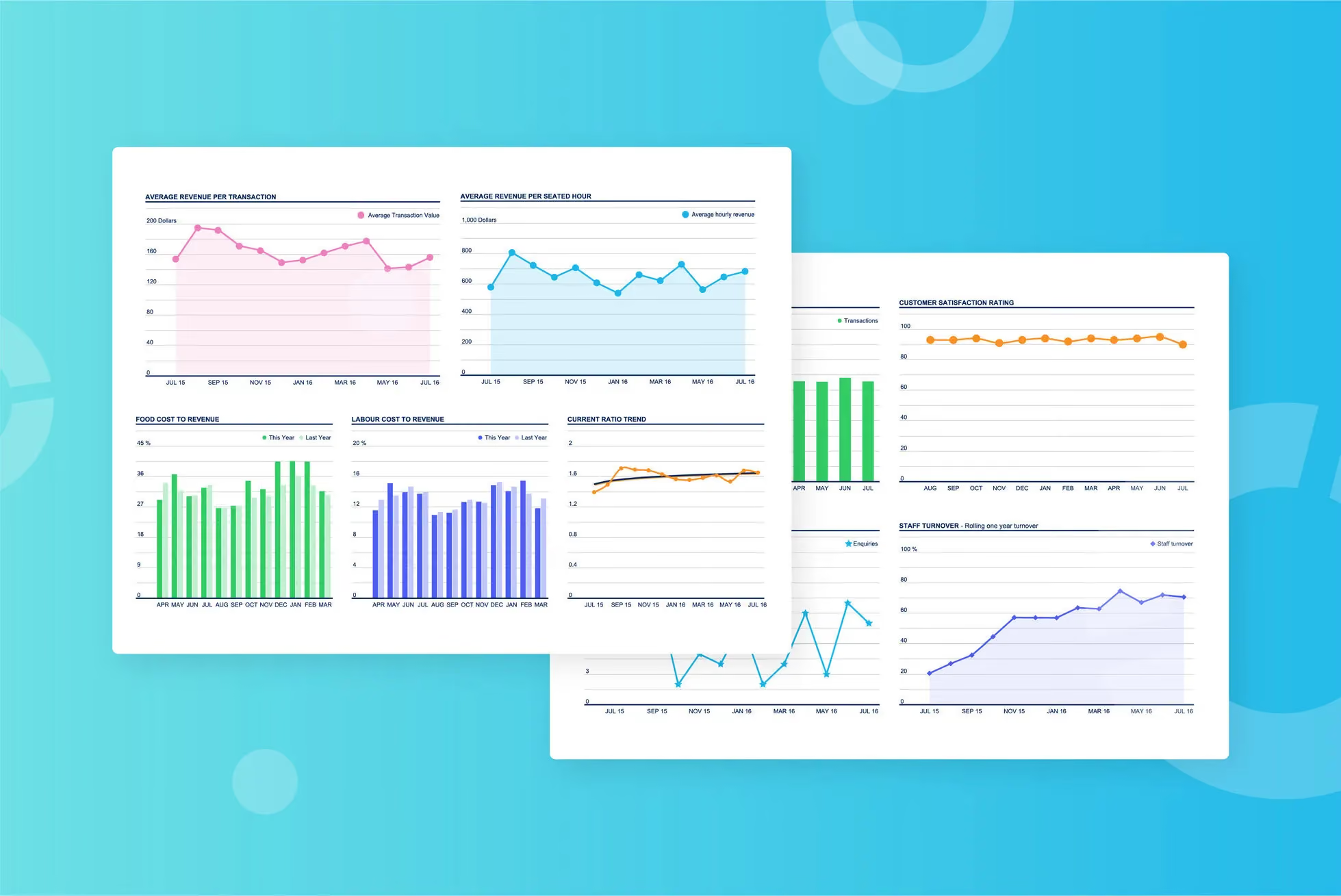
  • Make performance easier to understand. Most leaders do not want another spreadsheet to interpret. They want to know what is performing well, where something is off track and where they should focus their attention. A clear scorecard or ranking can make those conversations much more productive.

Spotlight Perspective

Spotlight Reporting and Spotlight Forecasting are our consolidation tools for commonly-owned groups. CFOs and Finance Teams use Spotlight to handle:

  • Multi-entity
  • Multi-currency
  • Eliminations
  • Fractional Ownership.

Spotlight Reporting lets you produce a consolidated report across your group. It brings financial information from multiple entities into one report, with support for multi-currency consolidation, intercompany eliminations and fractional ownership. This gives you a single view of group performance across all your entities.

Spotlight Forecasting lets you produce a consolidated forecast for your entire group. It brings budgets and forecasts from multiple entities together into one connected forecast, so you can see how changes in one part of the group could affect the wider business.

Together, Spotlight Reporting and Spotlight Forecasting give CFOs a clearer view of both where the business is now and where it is heading.

3 Practical Takeaways

  1. Isolate the manual work first. Before changing your reporting process, understand how much time your team spends collecting, cleaning, reconciling and reformatting information from different entities. That will show you where the biggest opportunities are.
  2. Choose the comparisons that actually matter. Decide what you want to compare across your organisation, whether that is performance against budget, the network average, last year or your strongest performers. The right comparison often reveals more than the headline number.
  3. Make the numbers easier to act on. When you present performance to your leadership team or board, start with the areas that need attention rather than making them work through pages of figures themselves. Clear comparisons and simple scorecards can make the conversation much more focused.

The bottom line

As a first-time CFO, you do not need to have every part of a multi-entity reporting environment perfected immediately. What you need is enough visibility to understand what is happening at a macro level, enough consistency to compare performance at a micro level, and enough confidence in the numbers to have useful conversations with the various people running the business.

The real goal is to spend less time working out what the numbers are and more time understanding what they mean and what the organisation should do about them.

See it in action

See how Spotlight Reporting and Spotlight Forecasting can tackle multi-entity reporting and forecasting into a single view, whatever the size or structure of your business. Start a trial or book a demo with our team.

A CFO’s Guide to Managing Multiple Entities and the Bigger Picture

Managing one business is complicated enough. Add additional entities, accounting systems, countries, economic conditions, currencies, and all of sudden keeping track of the bigger picture becomes much harder.

Suddenly, the numbers you need are coming from different places, using different processes and sometimes being prepared by different people. One entity may close on time while another is still waiting on information. Intercompany balances need to be reconciled and fractional ownership considered. Foreign exchange movements need to be understood. Group-level reporting needs to make sense alongside the individual performance of each entity.

And the CFO still needs to give the CEO and Board a clear answer when they ask a deceptively simple question: "How is the business performing?"

This is where multi-entity or group finance becomes less about producing more reports and more about ensuring confidence in the numbers. You need enough consistency to compare performance across the organisation, while still understanding that each entity may have its own customers, costs, market conditions and operational realities.

For a first-time multi-entity, group CFO, that can be a significant shift. You are no longer just responsible for the financial performance of one part of the organisation. You are responsible for helping leadership understand how all the parts of the group fit together.

Leadership Perspective

When you inherit a group with multiple entities, the first challenge is usually not deciding what the perfect reporting structure should look like. It is working out what you can actually trust now, where the gaps are or could be and how much manual work and toil is sitting behind the numbers.

A number of things tend to make the biggest difference:

  • Understand how the numbers are being assembled today. Before changing the process, find out where each entity gets its data, who prepares it, which systems are involved and where the manual work happens. You will often find that the reporting process depends on a handful of people who know how to make everything work.
  • Create one consistent view of performance. Your entities may operate differently, but leadership still needs a common way to understand revenue, profitability, costs, cash and other key measures. Consistency of treatment and allocation makes it much easier to see what is actually happening across the group.
  • Look beyond the headlines. A consolidated result can tell you whether the organisation is performing well overall, but it can also hide significant differences underneath. Being able to quickly compare locations, branches, stores, chapters or entities can show you where performance is really being driven from.
  • Give comparisons some context. An entity performing below last year is not necessarily performing badly, just as growth does not automatically mean it is performing well. Comparing results with a network average, target or stronger-performing entities gives you a much more useful starting point for the conversation.
  • Decide who needs to see what. Different people need different levels of detail. A board may need the group picture, while a regional manager needs their region and a local operator needs to understand their own performance. Good reporting makes those views easier to manage without creating unnecessary noise or exposing sensitive information.
  • Plan for the things that make consolidation harder. Different accounting systems, currencies, reporting periods, charts of accounts and local practices can all create additional work. Understanding these differences early means you can address them rather than discovering them every time you close the books.
  • Make performance easier to understand. Most leaders do not want another spreadsheet to interpret. They want to know what is performing well, where something is off track and where they should focus their attention. A clear scorecard or ranking can make those conversations much more productive.

Spotlight Perspective

Spotlight Reporting and Spotlight Forecasting are our consolidation tools for commonly-owned groups. CFOs and Finance Teams use Spotlight to handle:

  • Multi-entity
  • Multi-currency
  • Eliminations
  • Fractional Ownership.

Spotlight Reporting lets you produce a consolidated report across your group. It brings financial information from multiple entities into one report, with support for multi-currency consolidation, intercompany eliminations and fractional ownership. This gives you a single view of group performance across all your entities.

Spotlight Forecasting lets you produce a consolidated forecast for your entire group. It brings budgets and forecasts from multiple entities together into one connected forecast, so you can see how changes in one part of the group could affect the wider business.

Together, Spotlight Reporting and Spotlight Forecasting give CFOs a clearer view of both where the business is now and where it is heading.

3 Practical Takeaways

  1. Isolate the manual work first. Before changing your reporting process, understand how much time your team spends collecting, cleaning, reconciling and reformatting information from different entities. That will show you where the biggest opportunities are.
  2. Choose the comparisons that actually matter. Decide what you want to compare across your organisation, whether that is performance against budget, the network average, last year or your strongest performers. The right comparison often reveals more than the headline number.
  3. Make the numbers easier to act on. When you present performance to your leadership team or board, start with the areas that need attention rather than making them work through pages of figures themselves. Clear comparisons and simple scorecards can make the conversation much more focused.

The bottom line

As a first-time CFO, you do not need to have every part of a multi-entity reporting environment perfected immediately. What you need is enough visibility to understand what is happening at a macro level, enough consistency to compare performance at a micro level, and enough confidence in the numbers to have useful conversations with the various people running the business.

The real goal is to spend less time working out what the numbers are and more time understanding what they mean and what the organisation should do about them.

See it in action

See how Spotlight Reporting and Spotlight Forecasting can tackle multi-entity reporting and forecasting into a single view, whatever the size or structure of your business. Start a trial or book a demo with our team.

Latest articles