In this article, Richard Francis FCA (CEO & Founder, Spotlight Reporting) and Will Farnell (Co-founder, App Advisory Plus) explore how accountants can leverage these changes to build more purposeful and profitable practices, moving beyond mere number-crunching to become indispensable trusted advisors.
From Compliance to Advisory: A Historical Perspective
The accounting profession has come a long way from the days of paper ledgers and faxes. For decades, the core of accounting was compliance: ticking boxes, preparing tax returns, and auditing receipts. While essential, this work was often backward-looking and transactional. As Richard notes, clients often viewed it as a necessary evil, like a trip to the dentist, something they begrudgingly paid for.
The shift began with a desire for more purposeful work. The goal was simple: do work that clients wanted to pay for, not just what they had to. This type of work involved more than just crunching numbers; it was about building relationships and providing forward-looking strategic guidance.
Technology as an Enabler of Change
The cloud accounting revolution, spearheaded two decades ago by platforms like Xero and QuickBooks Online, was a game-changer. These technologies, with their bank feeds and open APIs, transformed how accountants accessed and used data. Instead of waiting months for a client's records, accountants could now access near real-time data, providing a foundation for more timely and effective advice.
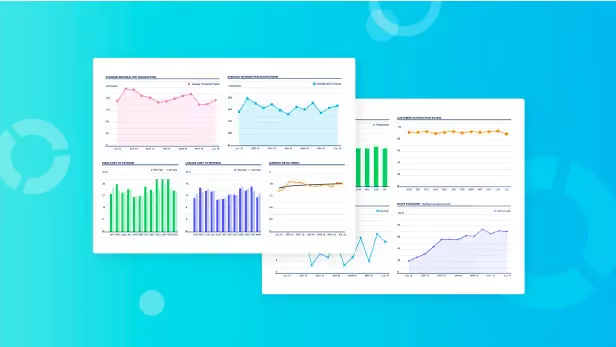
Richard highlights the importance of this technological shift, emphasising that it has lowered the cost of compliance, making it a "knife fight" for those who only offer it. However, for those who leverage technology to provide value-added services, it has allowed a diversification of valuable services and opened up a world of opportunities. The key is to use technology not just for efficiency, but as an engine for monetisation. Tools for reporting, forecasting, and consolidation enable accountants to have more meaningful conversations with clients, turning data into actionable insights.
The Evolving Expectations of Clients
Client expectations are also changing, driven by what Will Farnell calls the "Amazon effect"—the desire for instant, on-demand services. Modern business owners, particularly younger generations, are increasingly valuing their time and are willing to outsource tasks they don't want to do, creating a prime opportunity for accountants.
However, the shift isn't limited to a single demographic. Clients of all ages and stages of business are seeking guidance, whether it's a startup looking for a roadmap to growth or a seasoned business owner preparing for succession. The challenge for accountants is to move past the misconception that clients will automatically ask for advisory services. It has to be a proactive, human-to-human conversation.
The secret to selling advisory isn't about salesmanship; it's about listening. Instead of offering "management reporting" ask clients, "What would a good year look like for you?" When a client says they want to take an extra £20,000 out of the business, you now have a goal to work towards. The advisory services you propose, whether it's a cash flow forecast or a strategic plan, become a necessary means to achieve that goal, not an optional extra.
The Future of Advisory: What You Need to Do Now
The future of accounting is clear: it's not about what you can do, but what you should do. To stay relevant and thrive, firms need to:
1. Prioritise and Manage Time
The first step to embracing advisory is to stop wasting time on low-value clients. Richard's advice is to "get rid of the dirty dozen"—the clients who are a drain on your resources and don't value your expertise. By offloading these clients, you free up time to focus on those who are willing to invest in your advisory services.
2. Invest in the Right Tools
Technology is your ally. Platforms like Spotlight Reporting provide the tools you need to efficiently deliver high-value services. Don't be afraid to invest in paid subscriptions for AI tools and other technologies as well. Your team is already using these tools, so you might as well provide them and set some guardrails around their use.
3. Educate Yourself and Your Team
According to Richard, the most important areas for professional development are AI and ESG (Environmental, Social, and Governance). AI is already changing how accountants work, and it's essential to understand its capabilities and limitations. Similarly, while still in its early stages for many firms, ESG is a growing opportunity. Educating yourself on these topics allows you to offer proactive, high-value advice and differentiate your firm.
4. Cultivate a Human-Centric Culture
While technology is crucial, the human element remains at the core of advisory. The ability to have empathetic, trusting conversations with clients is irreplaceable. Hire and train team members who are not just great with numbers, but also skilled in communication and relationship-building. These "curious" individuals will be the future of your firm, bridging the gap between data and human decision-making.
By focusing on these areas, accountants can move beyond the "knife fight" of compliance and embrace a more profitable, fulfilling, and purposeful future as trusted advisors.
Curious? Watch the entire episode of Richard and Will, here.